
Failing Drain Field: Repair or Replace in Marion County Soil?
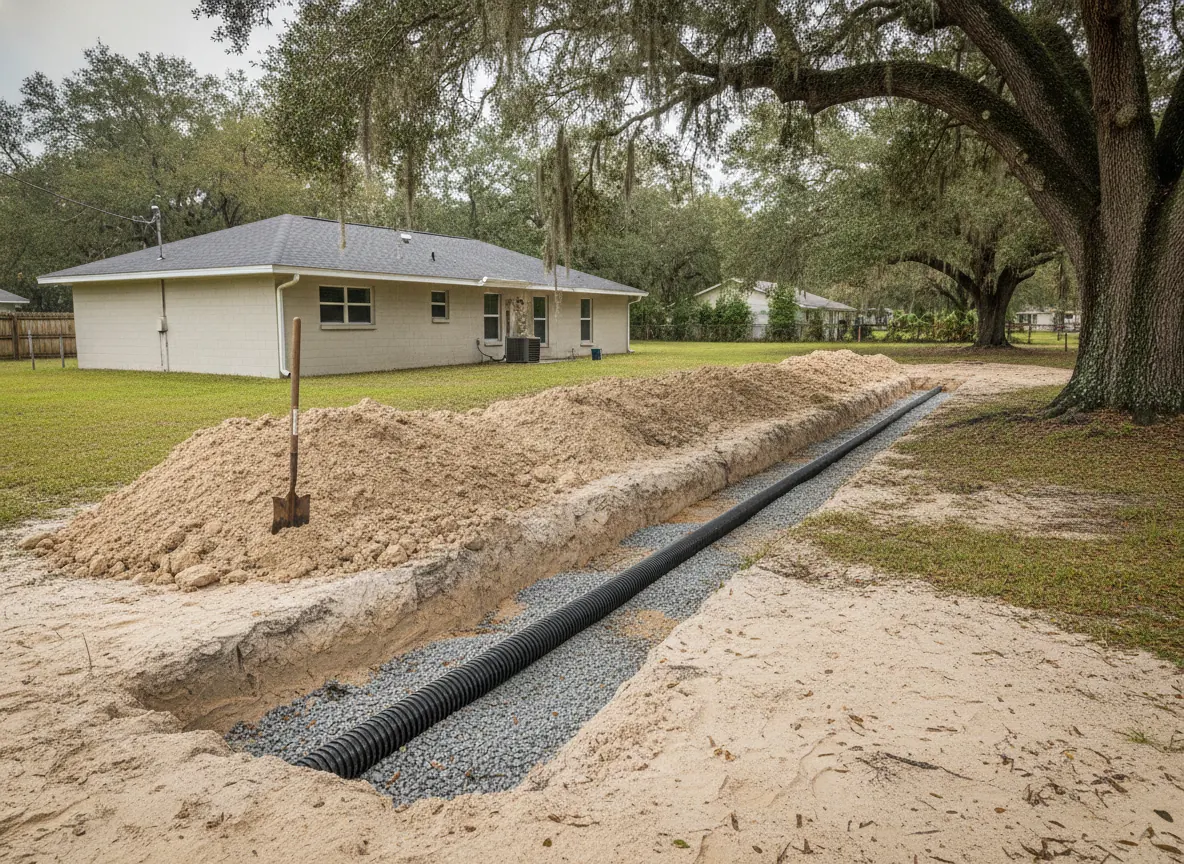
Whether a failing drain field in Marion County can be repaired or has to be replaced depends on two things: why it failed, and whether the fix needs a DEP repair permit. A field that is only saturated after summer storms, or clogged along one line, may need a smaller repair. A field that sits too close to the water table, or is packed with solids, usually means a new drainfield. And inside the Silver Springs and Rainbow Springs cleanup plan, any repair that needs a DEP permit also brings the upgrade to a nitrogen-reducing system, which often settles the repair-or-replace question for you.
First, check whether the drain field is really failing
EPA lists the common signs of a failing system: sewage backing up into toilets or drains, slow drains, gurgling, standing water or damp spots over the drainfield, sewage odors, and bright green, spongy grass over the field even in dry weather. Our post on signs your septic tank is full covers the tank side of the same symptoms.
Timing matters in Ocala. The city averages 51.64 inches of rain a year, and 27.91 inches of it falls from June through September (NOAA 1991–2020 normals). A wet field in August is not proof of failure. UF/IFAS advises cutting back on water use after flooding until the drainfield soil drains. EPA treats soft, wet soil around the field with no significant rainfall as the stronger warning sign.
Why drain fields fail in Marion County soil
Marion County has two very different kinds of ground, and they fail in different ways.
- Wet flatwoods and prairie-edge soils. On poorly drained Blichton, Pomona, Flemington and Eureka soils, the seasonal high water table can sit within about 6 to 12 inches of the surface. Florida Rule 62-6.006 wants the wettest-season water table at least 24 inches below the bottom of the drainfield, which is why many of these lots have filled or mounded fields. When a field here fails, the usual question is whether it has enough separation from the water, and that is rarely fixed by patching one line.
- Sandy ridge soils. Candler, the most common soil series in the county survey, and Arredondo sand have no seasonal water table within about six and a half feet. Water drains fast, which is why the springs rules exist. Failures here tend to come from the system side: EPA notes that a tank full of solids, or heavy water use, can push solids into the drainfield and clog it.
NRCS rates about 88% of the county survey area “very limited” for septic absorption fields. That is a national engineering rating, not a Florida permit rule, and most Marion homes on those soils have working systems. It does explain why a contractor will ask about your soil before recommending a fix. You can look up your lot on the NRCS Web Soil Survey.
The permit question that decides repair vs replacement
Since July 1, 2025, Florida DEP (not the county health department) issues septic permits in Marion County. Under the Silver Springs and Rainbow Springs plan, final and effective April 27, 2026, an existing system must be upgraded to an enhanced nutrient-reducing (ENR) system whenever a DEP construction permit is needed to repair, modify or replace it, unless sewer to the property is planned and funded.
That covers most of the county, including Citra and Anthony in DEP’s point checks. So the first thing to ask any contractor is: does this fix need a DEP repair permit? If it does, plan for a nitrogen-reducing system, not just a new field. Confirm your parcel on DEP’s map at floridadep.gov/BMAPs-ARP-OSTDS.
Two other rules apply. If public sewer is available to a system that needs repair, s. 381.00655 gives the owner 90 days after DEP notice to connect. And Florida Department of Health guidance from Charlotte County says the tank must be pumped by a registered septic tank pumper before a repair evaluation; Marion permits are now DEP’s, so confirm the current step with DEP staff at OSP_CSA@FloridaDEP.gov.
Drain field repair and replacement costs
Typical ranges (estimates from HomeAdvisor, June 2026, and Florida Realtors, September 2026, not quotes):
- Lateral line or field failure repair: about $1,500–$5,000, up to $20,000
- Drain field installation: $5,000–$12,000; about $7,000 is a typical replacement
- Nitrogen-reducing (ENR) system, Florida: about $15,000–$35,000 or more
- DEP fees: existing system and repair evaluation $50, permit $55, inspection $75, plus a $5 surcharge
The drainfield replacement cost page breaks these down further. Rule 62-6.022 penalizes a contractor for doing work that is clearly not necessary without telling the owner it is optional, so ask which items on a quote are required. If you can choose when to do the work, November and April are Ocala’s driest months (2.09 and 2.22 inches), which gives wet lots their best chance to dry out.
Getting a second opinion before you commit
Because the permit trigger can turn a few-thousand-dollar repair into a full ENR system, it pays to compare written quotes and ask each company the same questions: what failed, does it need a permit, and what are the options. For each company, ask for its DEP septic tank contractor registration number. Since July 1, 2022, owners can also hire a private provider for permit inspections. Florida Septic Works is a referral service, not a septic tank contractor: we connect you with independent local septic companies for drain field repair in Ocala and across Marion County. Request a free quote or call (877) 752-8911.
Drain field FAQ
Can a failing drain field be repaired instead of replaced?
Sometimes. It depends on why it failed and how much of the field is affected. HomeAdvisor puts lateral line or field failures at about $1,500 to $5,000, while full replacement typically runs about $7,000 and can reach $20,000. Ask the contractor what caused the failure and whether the fix needs a DEP repair permit.
Does repairing a drain field in Marion County mean I need a nitrogen-reducing system?
If the repair needs a DEP construction permit and the property is inside the Silver Springs and Rainbow Springs cleanup plan, yes: the plan requires an upgrade to a system that removes at least 65% of nitrogen, unless sewer is planned and funded for the property. Most of the county is inside the plan; check your parcel on DEP’s map.
Is a soggy drain field after summer rain a sign it is failing?
Not on its own. Ocala gets about 28 inches of rain from June through September, and UF/IFAS advises cutting back water use after flooding until the drainfield soil drains. EPA treats soft, wet soil over the field with no significant rainfall as the stronger warning sign, along with backups, slow drains and sewage odors.
This is general information, not legal advice.