
Septic Tank Flooded After a Hurricane? What Ocala Homeowners Should Do
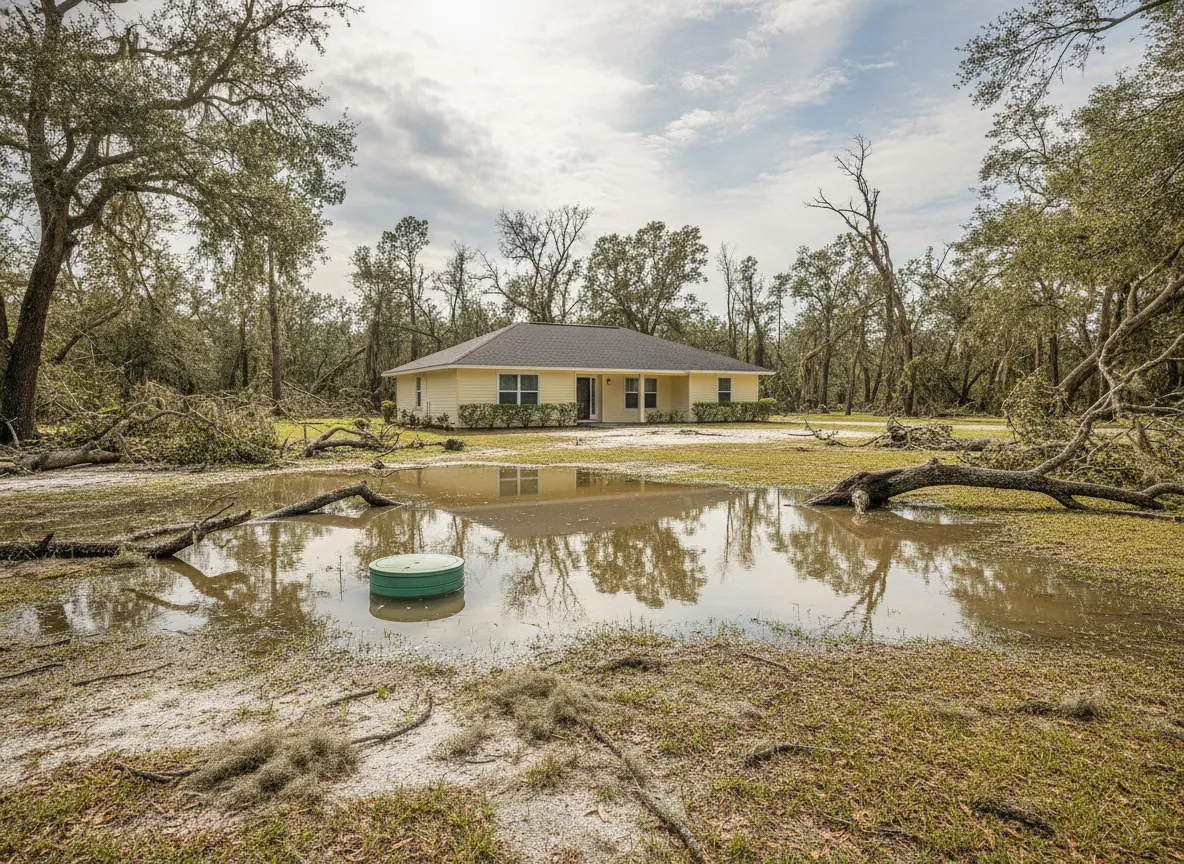
If your septic tank or drain field floods after a hurricane, use as little water as you can, leave the tank alone until the floodwater goes down, and then have the system checked. UF/IFAS Extension is clear about the one thing not to do: don’t have the septic tank pumped until the floodwaters recede, because emptying a tank in saturated ground can lift it out of place. In Marion County there’s a second point. If the storm damage needs a DEP repair permit, the springs rules generally require the repair to be a nitrogen-reducing system.
Why Ocala septic systems flood after a hurricane
Ocala gets 51.64 inches of rain in a normal year, and 27.91 inches of it, about 54%, falls from June through September (NOAA 1991–2020 normals, Ocala station). Hurricanes land on ground that is already wet. During Hurricane Milton in October 2024, the National Weather Service in Jacksonville reported 7 to 11 inches of rain across parts of St. Johns, Putnam and Marion counties, including 9.68 inches at a gauge south of Ocala.
Where that water goes depends on your soil. On the deep sands of the central ridge, such as the Candler series that covers about a quarter of the county survey area, the seasonal water table sits more than six and a half feet down. On the flatwoods and prairie-edge soils (Blichton, Pomona, Flemington and Lynne), NRCS puts the seasonal high water table within about 6 to 12 inches of the surface. On those lots a big storm can put the drain field under water, and the system has nowhere to send its effluent.
Before the storm: get your septic system ready
- Cut water use in the days before a forecast hurricane. UF/IFAS recommends it so the tank and drain field have room to spare.
- If your system has an electric pump, switch it off at the breaker before flooding. That includes many mounded systems and aerobic or nitrogen-reducing units.
- Know where your tank lids are. After the storm you’ll want to check them for damage without digging around a soaked yard.
While the drain field is flooded: what to do with the septic tank
UF/IFAS advises avoiding household water, including toilets, while the drain field soil is flooded. If the field will stay under water for several days, stop using toilets and faucets connected to the system until the water recedes. Slow drains and gurgling during this time usually mean the drain field can’t take water, not that the tank needs pumping.
County health guidance in Florida says the same thing from another angle: with sluggish plumbing, minimize water use and don’t have the tank pumped. A very high water table can crush a tank that was pumped dry or push it up out of the ground. On a flatwoods lot after a Milton-size rain, that can happen.
After the water drops: inspection, pumping and repairs
Once the yard has drained, UF/IFAS recommends having the system inspected by a septic professional as soon as possible after any flooding. Florida county guidance also says not to repair the tank or drain field until the ground has dried. A standard inspection typically runs about $100–$300 (estimate). See our septic inspection page. If sewage is backing into the house, emergency septic service explains what to ask when you call.
If the inspection finds damage, here’s the Marion-specific part. Every repair needs a DEP permit, and since July 1, 2025 DEP’s Onsite Sewage Program issues them in Marion County. Inside the Silver Springs and Rainbow Springs BMAP, which covers most of the county, a permit to repair, modify or replace an existing system requires an enhanced nutrient-reducing (ENR) system that removes at least 65% of nitrogen. The exception is when sewer to the property is planned and funded. Florida Realtors puts ENR systems at about $15,000–$35,000 or more. We couldn’t verify any open Marion County rebate for ENR upgrades (checked October 2026). Confirm your parcel on DEP’s BMAP map, because parts of Marion Oaks and the Fort McCoy area may fall outside it.
So a soggy drain field that recovers on its own once the ground dries is a different matter from one that needs a repair permit. Ask the contractor which one you have, and get it in writing. Our drain field repair page and ENR requirements guide go into more detail. Ask any company for its DEP septic tank contractor registration number and a written quote.
Hurricane septic FAQ
Can you pump a septic tank right after a hurricane?
No. UF/IFAS Extension says not to have the tank pumped until floodwaters recede. With the ground saturated, an emptied tank can shift or float out of place. Cut back water use, wait for the yard to drain, and then have the system checked by a septic professional.
Can I use my toilets while the drain field is flooded?
Use as little water as possible. UF/IFAS advises avoiding household water, including toilets, while the drain field soil is flooded. If the field will stay under water for several days, stop using toilets and faucets connected to the system until the water goes down.
Does storm damage to a septic system in Marion County need a permit?
Yes, any repair needs a DEP permit. Inside the Silver Springs and Rainbow Springs BMAP, a repair permit for an existing system requires an upgrade to a nitrogen-reducing (ENR) system unless sewer is planned and funded. Ask contractors to explain this before you sign.
Get a septic check after the storm
From Ocala to Dunnellon and Silver Springs, Florida Septic Works connects homeowners with independent local septic companies for free, no-obligation quotes. Florida Septic Works is a referral service, not a septic tank contractor. Request a free quote or call (877) 752-8911. This is general information, not legal advice.