
Aerobic Septic System Maintenance in Florida: What Ocala Owners Must Do
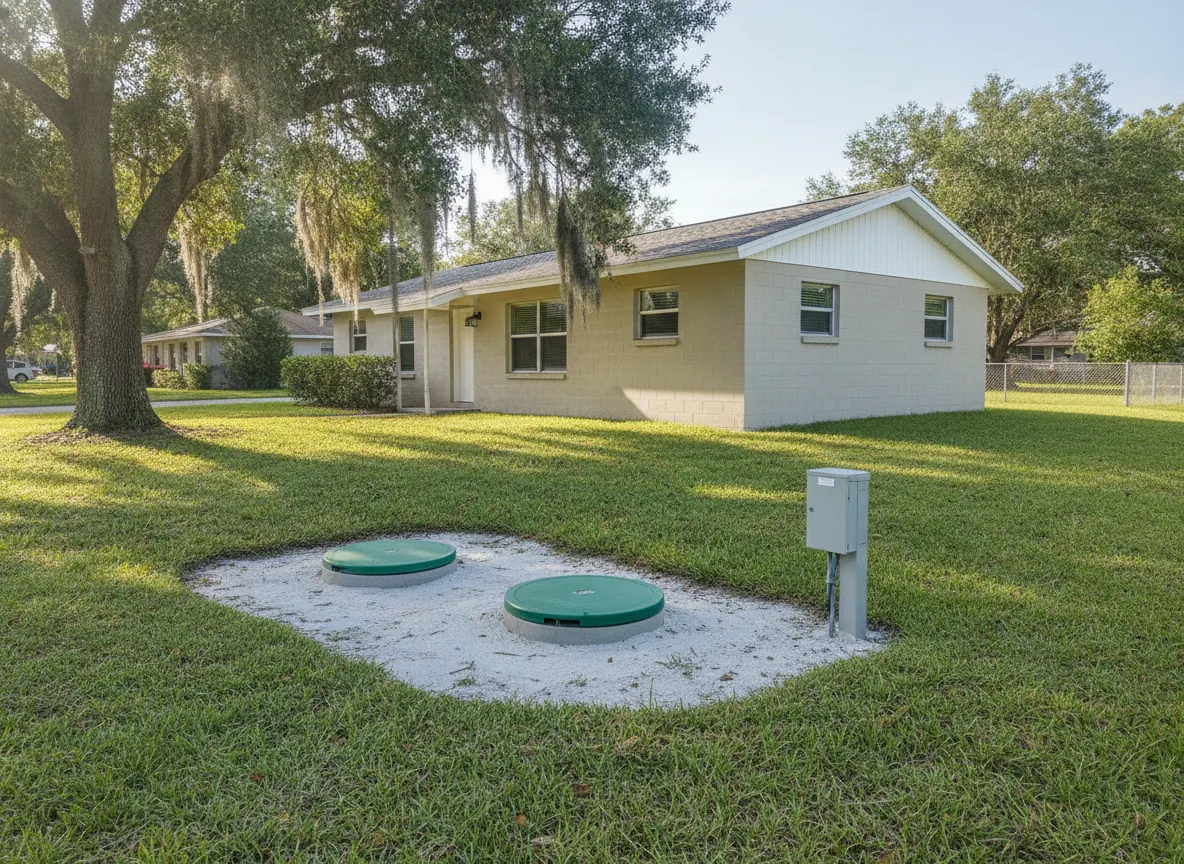
In Florida, aerobic septic system maintenance is required by law. Section 381.0065(4)(v) of the Florida Statutes says the owner of an aerobic treatment unit (ATU) “shall maintain a current maintenance service agreement” with a maintenance entity permitted by the Florida Department of Environmental Protection (DEP), and that the entity “shall inspect each aerobic treatment unit system at least twice each year.” The owner also needs a DEP operating permit, which costs $100 every two years under Rule 62-6.030. In Ocala and most of Marion County, more homes now fall under these rules, because new septic systems here have to be nitrogen-reducing.
Why more Marion County homes will have aerobic septic systems
Most of Marion County sits inside the Silver Springs and Rainbow Springs basin management action plan (BMAP), the state’s cleanup plan for the two springs. It became final and effective on April 27, 2026. DEP’s August 2026 table says that, as of July 27, 2026, a new septic system on any size lot inside that plan must be an enhanced nutrient-reducing (ENR) system that removes at least 65% of the nitrogen. An existing system has to be upgraded the next time it needs a DEP repair, modification or replacement permit, unless sewer to the property is planned and funded. A system that works and needs no permit does not have to change now.
An ATU is one of three approved nitrogen-reducing options. The others are in-ground nitrogen-reducing biofilters (INRBs) and nitrogen-reducing performance-based treatment systems. Which one fits your lot is a question for the installer; our septic system installation page covers how new systems are permitted here, and the Florida ENR rules guide has the full DEP table.
Location matters. DEP map checks put Silver Springs and Anthony inside the Silver Springs priority focus area, while most of Marion Oaks and the centre of Fort McCoy tested outside the plan boundary. Those were sample points, so confirm your own parcel on DEP’s map at floridadep.gov/BMAPs-ARP-OSTDS.
What Florida’s aerobic septic maintenance rules require
- A maintenance agreement with a maintenance entity that holds a DEP service permit, kept current for as long as you own the unit.
- At least two inspections a year under that agreement.
- A DEP operating permit for the unit: $100 for two years, separate from whatever the maintenance company charges.
Who may do the work is set by Rule 62-6.019. Anyone who advertises septic maintenance to the public must be a registered septic tank contractor, with one carve-out: permitted ATU and performance-based system maintenance entities. DEP publishes a list of active maintenance entity permits by county. The March 31, 2026 list shows at least nine for Marion County, based in Ocala, Belleview, Reddick and Anthony, and it names the brands of unit each one services. If your unit’s brand isn’t on a company’s line, ask before you sign.
Since July 1, 2025, DEP (not the county health department) handles septic permits in Marion County. Applications go through osp.floridadep.gov, and Marion program staff can be reached at OSP_CSA@FloridaDEP.gov or 850-245-8362.
Keeping an aerobic unit on track in Ocala’s rain and soil
Ocala averages 51.64 inches of rain a year, and 27.91 inches of it falls from June through September (NOAA 1991–2020 normals, Ocala station). Soil decides what that water does under your yard. Candler sand, the most common series in the county soil survey, has no seasonal water table within about six and a half feet, so effluent moves down fast. That speed is the reason the springs rules exist. On poorly drained Blichton, Pomona and Flemington soils, the seasonal high water table can sit within 6 to 12 inches of the surface.
Florida Rule 62-6.006 wants the wettest-season water table at least 24 inches below the bottom of the drainfield, which is why many wet-ground lots have filled or mounded drainfields. An ATU treats the wastewater, but the drainfield still has to take it. The twice-yearly visits are a good time to ask how the drainfield looked after the summer rains and whether the tank needs pumping. UF/IFAS’s general guidance for Florida septic tanks is pumping every three to five years, depending on tank size and household use.
Questions to ask before you sign an ATU maintenance agreement
- Is your company on DEP’s maintenance entity list for Marion County, and do you service my unit’s brand?
- For any pumping or repair: what is your DEP septic tank contractor registration number? You can check it on the active-contractor search linked from floridadep.gov/SepticContractorRegistration.
- Does the pump truck show its septage disposal permit number? Rule 62-6.010(3) requires it in permanent letters at least 3 inches tall.
- What exactly do the two yearly visits include, and what does the year cost, in writing? We found no reliable published price for Florida ATU maintenance contracts, so compare written quotes.
- Which items on this visit are required and which are optional? Rule 62-6.022 penalizes doing work that is clearly not necessary without telling the owner it is optional.
For budgeting the system itself, Florida Realtors (September 2026) puts nitrogen-reducing systems at about $15,000 to $35,000 or more; see the ENR septic system cost page for the labeled ranges. We could not verify any open ENR rebate in Marion County (checked October 2026).
Getting quotes in Marion County
If you are building, replacing a failed system, or taking over an ATU with a home purchase, it helps to talk to more than one company. Florida Septic Works is a referral service, not a septic tank contractor: we connect you with independent local septic companies, who quote, contract and do the work. Request a free quote or call (877) 752-8911.
Aerobic septic FAQ
How often does an aerobic septic system need to be inspected in Florida?
At least twice a year. Florida law, s. 381.0065(4)(v), requires the owner of an aerobic treatment unit to keep a current maintenance agreement with a DEP-permitted maintenance entity, and that entity must inspect the unit at least twice each year. The owner also keeps a DEP operating permit, which is $100 every two years.
Does a new house in Marion County need an aerobic septic system?
A new system inside the Silver Springs and Rainbow Springs cleanup plan must be nitrogen-reducing on any lot size, as of July 27, 2026. An aerobic treatment unit is one approved option; in-ground nitrogen-reducing biofilters and performance-based systems are the others. Most of the county is inside the plan, but check your parcel on DEP’s map.
Do I have to replace my working conventional septic system now?
No. A system that works and needs no permit can stay as it is for now. The upgrade to a nitrogen-reducing system is triggered when you need a DEP repair, modification or replacement permit, unless sewer is planned and funded for your property. The plan also sets a long-term deadline of about 20 years from its 2026 adoption.
This is general information, not legal advice. Confirm the rules for your parcel with DEP.